
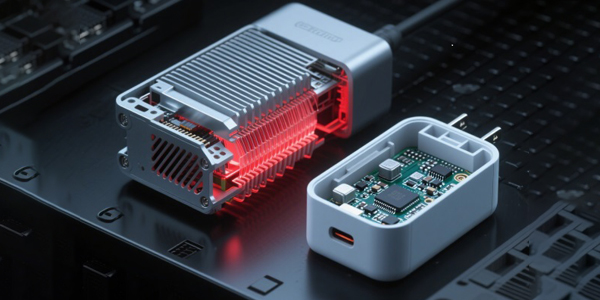
In today's era where electronic devices are increasingly prevalent, power adapters and chargers have become an indispensable part of our daily lives. Their primary function is to provide power to electronic devices, but in practical use, there are some notable differences between switching power adapters and chargers. This article will conduct a detailed comparison and analysis of the two in terms of definition, working principle, usage scenarios, advantages and disadvantages, so that readers can better understand the differences between them.
一、 Definition and Overview
A switching power adapter is a device that converts alternating current (AC) into direct current (DC), providing stable operating voltage and current for electronic devices. It employs high-frequency switching technology internally, adjusting the on-off time of the switch to achieve stable voltage and current output. Typically, it offers multiple output voltage and current specifications, accommodating the charging needs of various devices.
A charger is a device specifically designed for charging batteries, and it is typically used in conjunction with a specific battery or device. The charger converts alternating current (AC) into direct current (DC) suitable for battery charging and controls the charging process through a specific charging protocol to ensure that the battery can be safely and quickly fully charged. Chargers generally have fixed output voltage and current specifications, suitable for specific batteries or devices.
二、 Working Principle
The working principle of a switching power adapter primarily involves voltage conversion and stable output through its internal switch transistor and transformer. When AC power is inputted, the switch transistor conducts and discontinues at a specific frequency, generating high-frequency pulse signals. These pulse signals are transformed into the required DC voltage through the transformer. Subsequently, the output voltage is adjusted and stabilized by the internal voltage regulation circuit to ensure it meets the device's requirements.
The working principle of a charger involves the charging characteristics and charging protocols of the battery. The charger first converts alternating current (AC) into direct current (DC) through an internal rectification and filtering circuit, and then controls the charging process through specific charging protocols. These protocols typically include stages such as constant current charging, constant voltage charging, and trickle charging, to ensure that the battery can be safely and quickly fully charged. At the same time, the charger also needs to communicate with the battery or device to obtain the battery's charging status and charging requirements, so as to adjust the charging parameters.
三、Usage Scenario
Switching power adapters are commonly used to provide stable operating power for various electronic devices, such as laptops, tablets, monitors, etc. They typically feature multiple output voltage and current specifications to accommodate the charging needs of different devices. Due to their high energy efficiency and stable output voltage characteristics, switching power adapters are particularly common in devices that require long-term operation.
Chargers are primarily used to charge batteries, such as those in mobile phones and cameras. They are typically paired with specific batteries or devices to ensure safe and rapid charging. Chargers are widely used in mobile devices, photographic equipment, and other fields, providing crucial support for the longevity of these devices.
四、 Comparison of Advantages and Disadvantages
The advantages of switching power adapters mainly include high energy efficiency, stable output voltage, and a variety of specifications to choose from. Due to the use of high-frequency switching technology, switching power adapters have high energy efficiency and can reduce energy loss. At the same time, their stable output voltage ensures the normal operation of equipment and avoids malfunctions caused by power fluctuations. In addition, the choice of multiple output voltage and current specifications enables switching power adapters to adapt to the charging needs of different devices
However, switching power adapters also have some drawbacks. Firstly, due to their complex internal structure, their cost is relatively high. Secondly, for certain special devices or batteries, specific charging protocols or methods may be required, and switching power adapters may not be able to meet these requirements.
The advantage of a charger lies in its specialized design for battery charging, featuring fast charging, safety protection, and other functions. The charger can adjust charging parameters according to the charging characteristics and requirements of the battery, ensuring that the battery can be fully charged safely and quickly. At the same time, the charger usually has protection functions such as overcharge, overdischarge, and short circuit protection, which can effectively prevent battery damage or safety accidents.
However, chargers also have some limitations. Firstly, chargers are usually only compatible with specific batteries or devices, resulting in poor universality. Secondly, the charging speed of a charger may be limited by the performance of the battery itself, making it impossible to achieve faster charging speeds. In addition, some chargers may have issues such as low charging efficiency and high heat generation, which affect the user experience.


 +8613424360715