
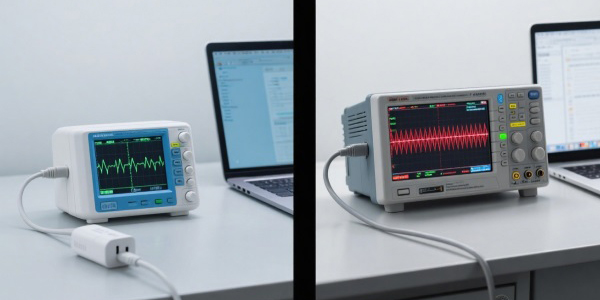
The output ripple of a power adapter refers to a periodic oscillating variation present in the output voltage. The output ripple of a power adapter can affect multiple performance indicators, including power quality, efficiency, noise, electromagnetic compatibility, and equipment reliability.
Firstly, the output ripple of the power adapter can affect power quality. If the ripple in the output voltage of the power adapter is too large, it can cause unstable power supply to the device during operation, leading to unstable operation or malfunction of the device. Conversely, the smaller the output ripple of the power adapter, the more stable the power supply to the device during operation, effectively avoiding malfunctions and unstable operation of the device.
Secondly, the output ripple of a power adapter also affects its efficiency. Excessively large output ripple can lead to increased energy loss during the conversion of output voltage, thereby reducing the efficiency of the adapter. Conversely, a power adapter with small output ripple can more efficiently convert input voltage into stable output voltage, improve the efficiency of the adapter, and reduce energy loss.
In addition, the output ripple of the power adapter can also affect the noise of the device. The output ripple is reflected on the power cord of the device and propagates to other parts of the device through its circuit, causing electromagnetic interference and noise issues. These noises may interfere with the normal operation of the device. Therefore, the output ripple of the adapter should be controlled within the allowable range as much as possible to reduce the impact of noise on the device. Furthermore, the output ripple of the power adapter is also related to electromagnetic compatibility. Excessive output ripple can increase electromagnetic radiation and electromagnetic sensitivity on the power cord, potentially leading to interference and adverse effects between devices. The adapter should meet the corresponding electromagnetic compatibility standards to reduce radiation and sensitivity, ensuring that the devices can operate normally in an environment without mutual interference.
Lastly, the output ripple of the power adapter can also affect the reliability of the device. Excessive output ripple may cause damage to the electronic components of the device, shortening its lifespan or rendering it inoperative. Conversely, a smaller output ripple can reduce damage to the device components, enhancing the reliability and lifespan of the device.
In summary, the output ripple of a power adapter has an impact on multiple performance indicators such as power quality, efficiency, noise, electromagnetic compatibility, and equipment reliability. Therefore, when designing and selecting an adapter, attention should be paid to controlling the output ripple to ensure the performance of the adapter and the normal operation of the equipment.


 +8613424360715